
Newsroom
Go backWhat does the modern glass cutting process look like?
29-05-2025
For companies processing glass, including insulating glass, cutting material is one of the most crucial stages of the entire production process. Its precision determines not only the quality of the final products but also efficiency and minimizing material waste. In recent years, this area has undergone a revolution – from manual tools to advanced, fully automated production lines.
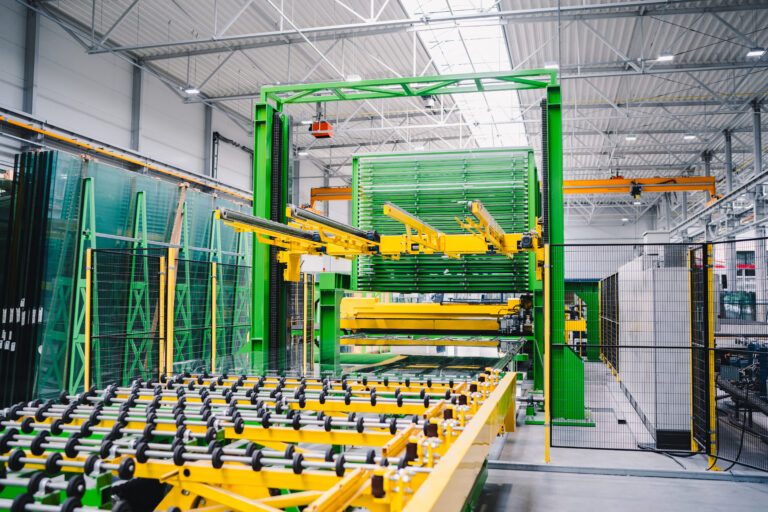
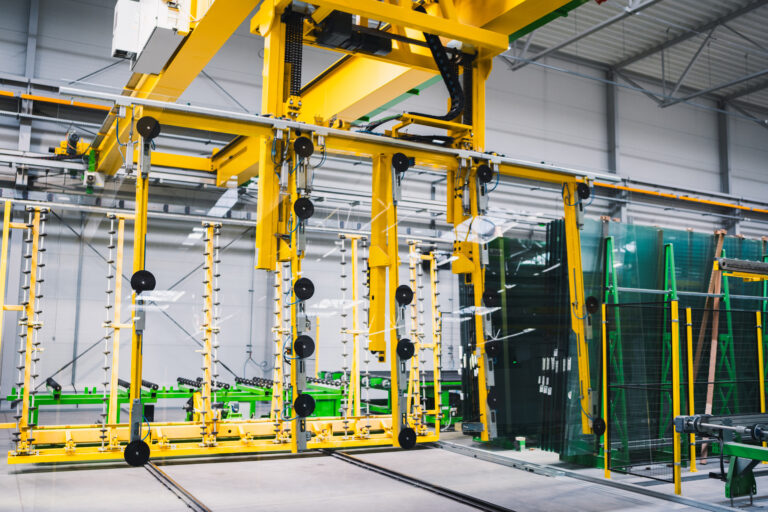
The process begins with large-format glass sheets, which are placed in special storage racks. At MATPOL, the glass is transported to the cutting line using an automated warehouse system, eliminating the risk of damage and increasing employee safety.
Before the first cut is made, specialized software analyzes orders and creates an optimal cutting plan for the glass sheet. This minimizes material waste and shortens production time. This is known as cutting optimization, a key element of modern glass processing.
The cutting itself is performed on cutting tables equipped with precision heads with carbide cutting wheels. The type of cutting depends on the type of glass, which is divided into:
• float glass – standard, non-tempered glass that is mechanically scored and automatically broken,
• laminated glass (VSG), which is first mechanically scored on both sides and then the PVB film is heated, allowing for controlled separation of the layers.
Modern machines, such as the HEGLA brand, which we use at MATPOL, use inspection cameras, laser systems, and automatic sensors, which translate into the quality of our products.
Once the glass is cut, the glass is broken using a point force, precisely along the previously made scratch. The precision of the machine ensures a clean and predictable break, resulting in high-quality components. After this step, the glass is prepared for subsequent processes.
The glass cutting process is highly automated, but machine operators play a key role, supervising the systems, monitoring cutting quality, and responding to any errors.
Before the advent of precision machinery, glass cutting was the domain of specialized craftsmen – glaziers. Back then, they used hand-held tools – diamond knives, straightedges, and glass-breaking pliers. Each cut required skill, experience, and a steady hand. This process was very time-consuming and error-prone, although it allowed for the creation of unusual formats and shapes. It’s worth noting that manual cutting is still used in art studios – for example, in the production of stained glass or unique glass elements.
At MATPOL, we focus on modern technologies and experience. Thanks to advanced glass cutting lines and thoughtful optimization, these processes in our factory are fast and efficient, and above all, safe and repeatable. This guarantees the quality we deliver to our customers.