
Newsroom
Go backArchitecture full of light, or how advanced glass processing technologies support the trend of maximizing the illumination of buildings
13-01-2026
Daylight has long ceased to be merely an aesthetic element in architecture. Today, it is a key factor influencing user comfort, building energy efficiency, and the market value of investments. Contemporary architecture is increasingly moving towards maximum interior lighting, and this trend would not be possible without the dynamic development of glass processing technologies and advanced architectural glass processing.
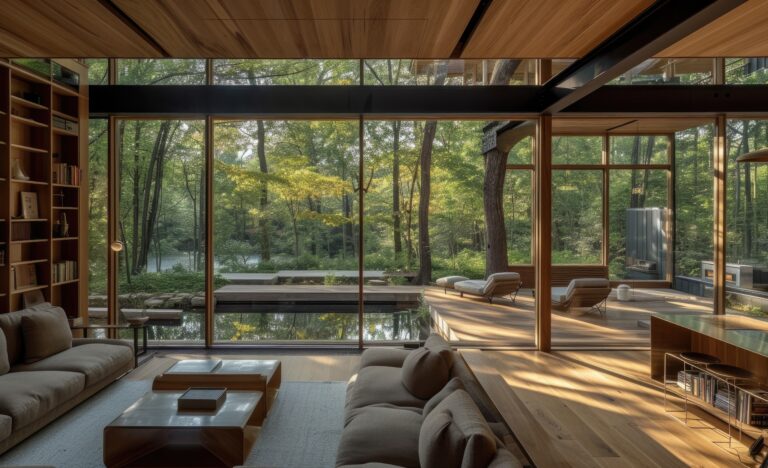
The growing popularity of large glazing, transparent facades, and large-format windows is a response to both end-user expectations and design trends. Architects are increasingly eager to embrace solutions that blur the line between interior and exterior, and developers perceive daylight as a real added value for investments. At the same time, window and door manufacturers strive to minimize profiles and maximize glass surface area, which places increasingly higher demands on the quality of the glazing units themselves.
In this context, glass processing companies like MATPOL play a key role. It is during the processing stage that decisions are made as to whether an ambitious architectural vision can be realized safely, durable, and in compliance with applicable standards. Precise cutting, grinding, tempering, and laminating of glass enable the production of large-format elements with high mechanical resistance and consistent quality, which is essential in the construction of modern glass facades and large-format windows.
Maximizing the amount of natural light in buildings, however, cannot come at the expense of user safety. Therefore, the use of tempered and laminated glass has become standard in modern construction. Tempered glass, thanks to its increased resistance to loads and temperature differences, is ideal for large glazing. Laminated glass, on the other hand, consisting of two or more panes bonded with foil, provides additional protection against breakage, which is particularly important for balustrades, glass roofs, and floor-to-ceiling glazing. Advanced glass processing now allows these properties to be combined with high aesthetics and transparency, without compromising design.
Energy efficiency is also a key aspect that is increasingly emerging in design discussions. Large glass surfaces require precise technical parameters to ensure optimal lighting while simultaneously controlling heat loss and limiting interior overheating. Glazing units using low-emissivity and selective glass play a key role in this regard. Modern glass processing technologies enable the production of solutions that effectively transmit daylight while meeting the requirements of energy-efficient and passive construction.
Collaboration between the architect, joinery manufacturer, and glass processor is also becoming increasingly important early in the design process. This approach allows not only for better matching of technical solutions to the architectural concept but also for optimizing costs, logistics, and the installation process. The experience of glass processing companies can be invaluable in this process, especially in non-standard projects, where both material expertise and the technological capabilities of the production facility are crucial.
Looking to the future, we can expect further development of daylight-based architecture. The growing interest in smart glass, solutions enabling dynamic control of light transmission, and increasingly larger glazing formats will further strengthen the role of advanced glass processing throughout the entire investment process. Glass processing technologies today constitute the foundation upon which modern, transparent, and functional architecture rests.
Architecture filled with light is no longer merely an aesthetic vision, but a conscious design choice supported by specific technological solutions. Behind these striking projects lie not only the designs and joinery systems but also precise, responsible, and innovative glass processing, which allows for the combination of light, safety, and energy efficiency in a single, coherent building concept.